

What Do Roblox's Evaluation Changes Mean for Brands?
On 19 August, Roblox halved a number most brand teams have never heard of, and it matters for anyone planning an activation aimed at younger players.
The number is 250. That's how many "highly engaged" plays a new Roblox experience now needs before it can be seen by anyone under 16. Until it clears that bar, your experience exists only for older users, however family-friendly it is and however big the media plan behind it.
If that's news to you, you're in good company. The evaluation system arrived earlier this year with little fanfare outside developer circles, and almost nothing has been written about what it means for brands. So here's the plain-English version, and what we'd do about it.
How the gate works
Every new Roblox experience launches restricted to 16 and over. To unlock what Roblox calls Kids and Select audiences, it has to pass an evaluation: 250 unique plays from highly engaged, age-checked 16+ players within a 60-day window. "Highly engaged" is Roblox's bot filter, assessed on signals like account age, play history and spend, so the plays have to come from real, active accounts rather than farmed traffic.
The threshold was 500 until last month. Roblox cut it to 250 on 19 August, framing the change as making younger audiences "much more accessible" to creators. Alongside the threshold, the publishing account itself needs ID verification, two-factor authentication and either a Roblox subscription or a one-time publishing fee before under-16s can enter.
None of this is hidden, exactly. It sits in Roblox's creator documentation, discussed at length on the developer forum. But it lives in the part of the ecosystem most marketing teams never read, which is how a rule reshaping launch plans for family brands has gone largely unremarked in marketing circles.
What it changes if you're building
The straightforward reading: an owned brand world aimed at under-16s no longer launches to its whole audience on day one. The launch plan needs an evaluation phase, a period where the experience is live but visible only to 16+, accumulating qualifying plays before the doors open fully. At 500 plays that phase was a real obstacle for anything without an existing fanbase. At 250 it's meaningfully shorter, but it still exists, and media spend timed for day one can now arrive weeks before the audience it was bought for.
There's also a subtler effect worth planning around. The players who count toward evaluation are 16 and over, age-checked, with real activity behind their accounts. That means the opening weeks of a kid-targeted brand experience have to be interesting enough to hold an older audience it wasn't designed for. Not every concept survives that.
Before this triggers any panic, one number from our own data: 65% of players in Walmart Discovered are over 18. Plenty of brand activations were never really about under-16s, whatever the assumptions in the planning deck, and for those the gate changes nothing at all. The first useful question is honest: does your activation actually depend on the audience the gate restricts?
What it changes if you integrate
Here's the part we find genuinely interesting. Established experiences have already cleared evaluation. Their audiences, including the under-16s, are already inside. Integrating a brand into a game that players love carries none of the cold-start problem, because there is no cold start.
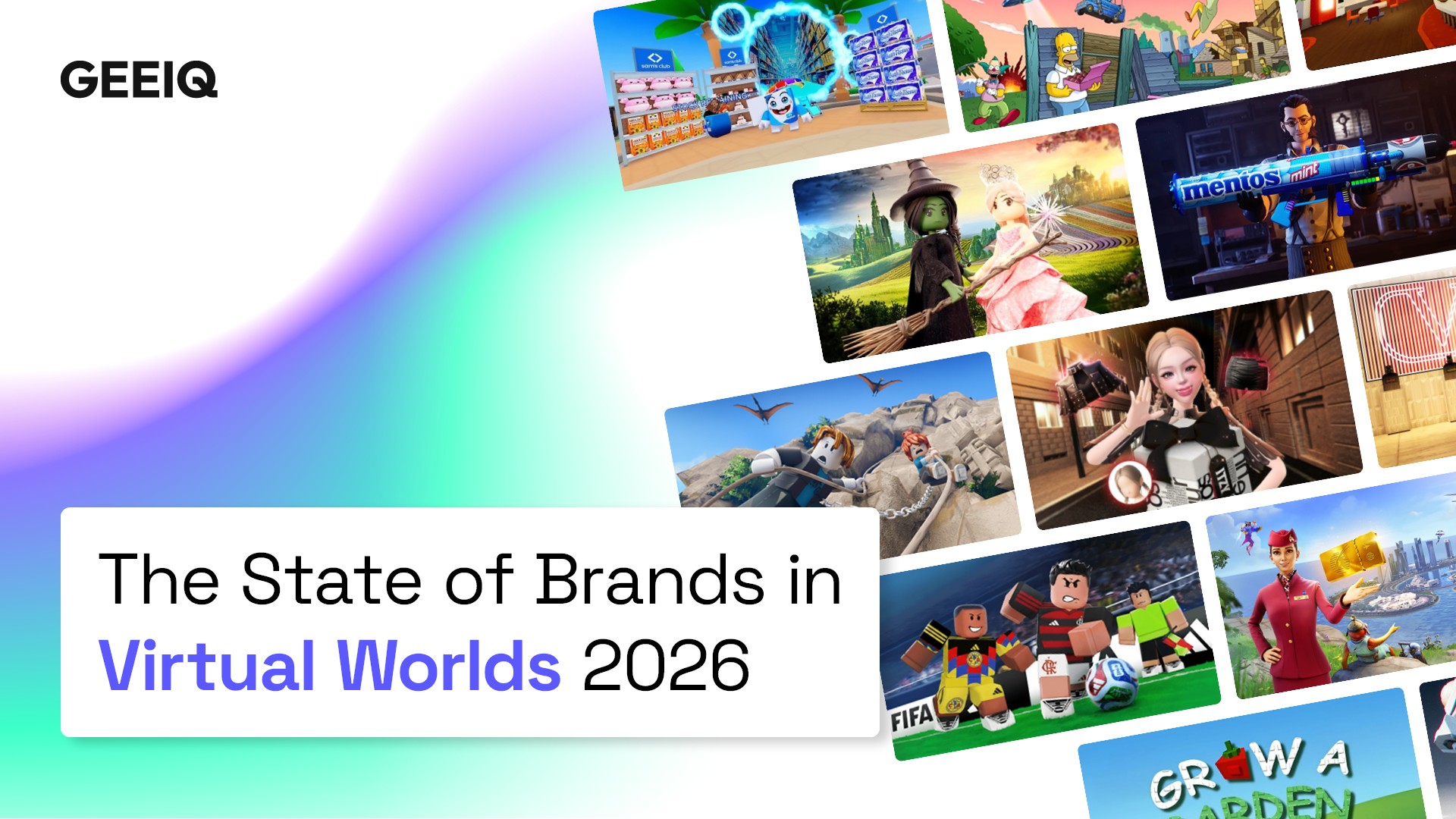
The industry was heading this way before the gate existed. Our State of Brands in Virtual Worlds 2026 report recorded integrations overtaking brand-owned worlds for the first time, 335 activations to 252, with owned worlds down 57% year on year. Bain's new gaming report calls Roblox the industry's centre of gravity for the same underlying reason: the audiences are already assembled, and they mostly stay put.
The results back it up. When DAISE wanted to reach Gen Alpha girls, it embedded its Fragrance Body Mists into a scavenger hunt across existing experiences rather than building its own, and reached that young audience at a $0.68 blended CPM with 145 million impressions and an 8.2 percentage point lift in brand awareness. Sam's Club made its Roblox debut by integrating into three top-performing games and drove five million engaged minutes and nearly a million virtual membership cards claimed inside four weeks. Neither brand waited for an evaluation clock, because the experiences they joined were already open to every audience.
The evaluation system adds one more advantage to a strategy the data already favoured.
The bigger picture
It's worth reading this change as part of a pattern rather than an isolated rule. The evaluation gate is built on the same age-verification architecture that has been reshaping Roblox all year, the system that also dented under-13 monetisation in the platform's last earnings. Roblox is trading a little friction for a lot of trust, and for brands that trade runs in the right direction: a platform that can verify its audiences is a platform where a CMO can defend the spend.
So the practical takeaway is short. Owned worlds still earn their place when a brand wants a persistent home and is prepared to invest in one; Walmart Discovered remains the proof. But if you're building one for a young audience, plan for the evaluation phase and design an opening act that works for the 16+ players who unlock it. If you're integrating, carry on; the gate was cleared before you arrived. And if you don't know which of those paths fits your brand, that's a data question before it's a creative one.
GEEIQ tracks activations, audiences and benchmarks across Roblox, Fortnite, ZEPETO and beyond. If you're planning your next move, book a demo.
Check your brand’s gaming footprint
A GEEIQ analyst sends you a free snapshot of your official and unofficial presence across gaming