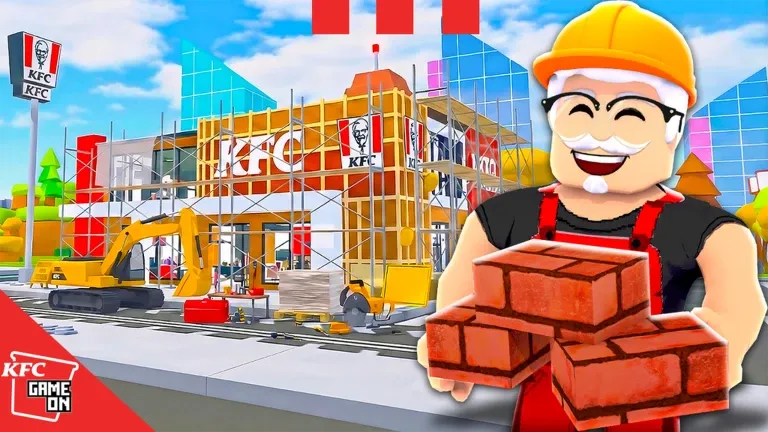


Last week, GamesBeat ran a headline built on GEEIQ data: KFC has over 70 million Roblox visits, and none of them came from an official experience. No brand team commissioned those visits, and no agency invoiced for them. Players built KFC restaurants into their roleplay cities, tycoon games and cooking sims, and tens of millions of other players walked through the doors. The biggest of them, Escape KFC Obby, has 44 million visits on its own.
And it's still happening. We found around 600 fan-made KFC items on the Roblox marketplace before we stopped counting. The most-loved has 5,885 favourites, and creators added 12 new ones in the last 90 days alone. Nobody at KFC signed any of it off, because nobody needed to. Add the top KFC gaming videos on YouTube and there are over 626 million views sitting on content the brand never commissioned, while KFC's only official UGC activity runs on Fortnite.
KFC is a vivid example, and far from a rare one. Run almost any major consumer brand through our data and a version of the same picture appears: a footprint of unofficial experiences, fan-made items and borrowed logos that most marketing teams have never seen, because nothing about it shows up in a dashboard they own.
We think this is one of the most useful signals in marketing right now. Here's what it looks like up close.
The four states of a brand footprint
When we pulled the launch data for GamesBeat, we ran four brands side by side: KFC, Naruto, Gucci and Walmart. Between them, they map the whole spectrum of what a gaming footprint can look like.
KFC is the pure shadow footprint: 70 million visits, none of them official, all of it built and sustained by players.
Naruto shows what happens when the brand is an entertainment IP. With no official presence on Roblox at all, six fan-made Naruto experiences have racked up 260.6 million combined lifetime visits, 146.3 million of them to Naruto War Tycoon alone, alongside 150 fan-made items and not one official one. And that undercounts it, because the biggest anime-inspired games avoid using the name entirely.
Gucci sits in the middle state, and shows what happens after an official chapter closes. The house was the luxury pioneer on Roblox, and 12 official Gucci items still live on the marketplace, one pair of official-era sunglasses carrying 41,200 favourites. But Gucci Town ended in June 2024 and the brand's live official worlds now run on ZEPETO, while on Roblox the fan-made side kept going without it: 138 unofficial Gucci items trade alongside the official dozen, outnumbering them eleven to one. The official presence moved on, and the demand stayed exactly where it was.
Walmart is the managed end of the spectrum, and proof of what deliberately closing the gap looks like. Walmart Discovered, built around what the Roblox community already valued, reached 20 million visits in its first six months with a 96.34% approval rating and 65% of players over 18, and now stands at 39.3 million lifetime visits. The fan-made tail kept growing around it: 112.2 million combined visits across the five Walmart experiences we found, with 147 fan-made items alongside the two official ones. A footprint read properly, then answered, and the two sides now feed each other.
The fan-made side can get remarkably convincing, too. One fan-built Honkai: Star Rail experience was polished enough that an industry dataset recorded it as brand-owned. The Roblox marketplace carries a whole ecosystem of imitators, "Gregg's™" and friends, trading on names their creators don't own. Some of it is flattering, some of it alarming. The brands concerned rarely see any of it.
One more brand from the same snapshot makes the counterpoint. Louis Vuitton has no official Roblox presence, and almost no unofficial one either: 16 fan-made items, no experiences found. A footprint has to be earned, even the kind you never asked for. That's exactly why it's worth reading as a signal. When players build your brand at KFC or Naruto scale, it's because they chose it over everything else they could have built.
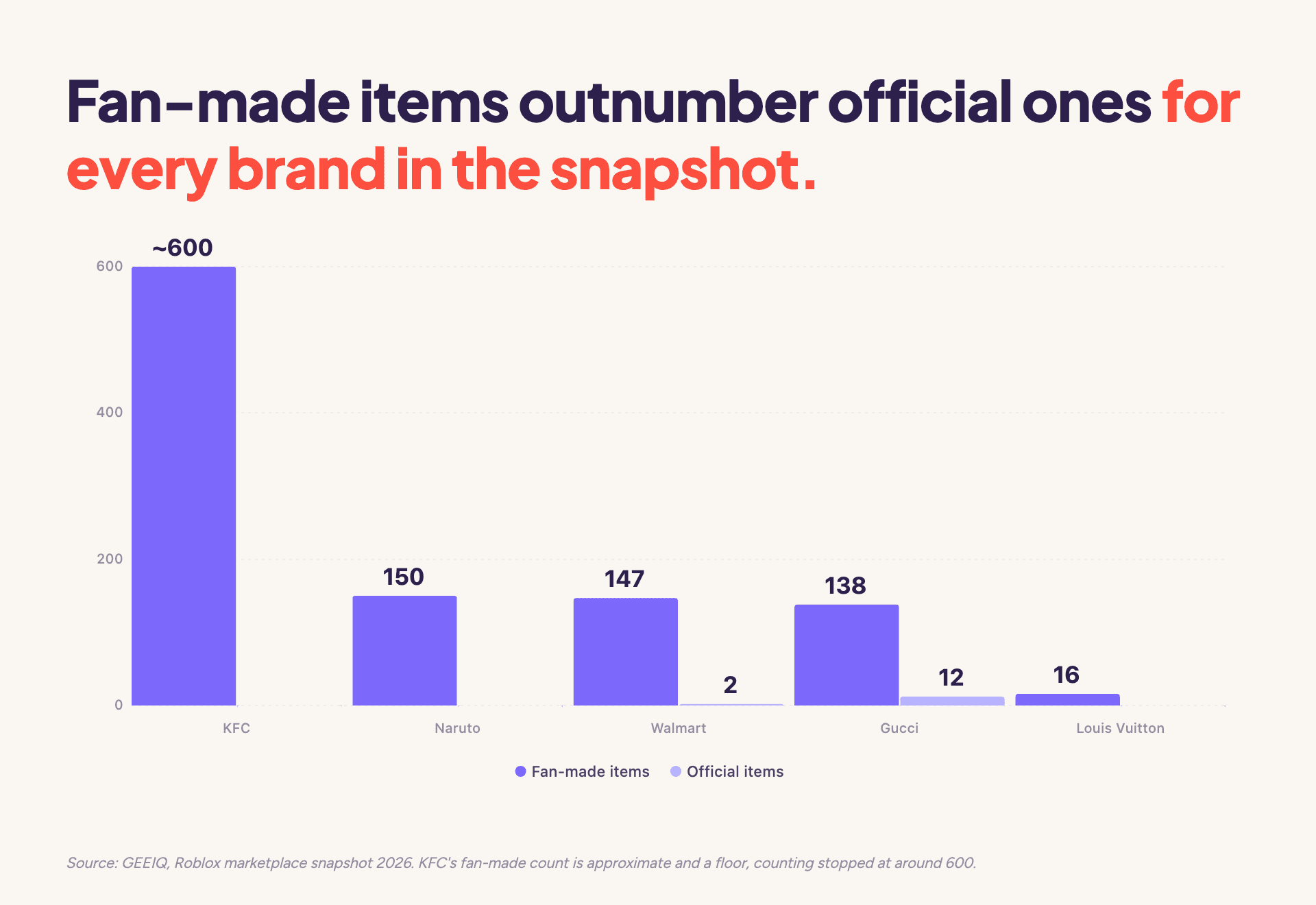
Items on the Roblox marketplace, by brand. Gucci is the closest to parity at eleven to one, and it got there by leaving. Source: GEEIQ, Roblox marketplace snapshot 2026. KFC's fan-made count is approximate and a floor, counting stopped at around 600.
Why the visits pile up without you
The behavioural explanation arrived the same week as the KFC headline, in Bain's Annual Gaming Report 2026. Among its findings from a survey of 5,300 players: only around one in five actively seek out new titles. Everyone else stays inside the games they already play, and lets new content come to them.
That single stat explains a great deal about how brands succeed and fail in gaming. It's why a beautifully built brand world can launch to silence: the audience was never going to travel to it. And it's why unofficial presence accumulates so reliably: culture flows into the worlds players already inhabit, carried by the creators who build there. When a Roblox developer adds a fried chicken shop to their city roleplay game, they're importing the real world their players recognise. The brand comes along for the ride, invited by everyone except the brand itself.
Our State of Brands in Virtual Worlds 2026 report caught the industry adjusting to this reality: brand integrations overtook brand-owned worlds for the first time last year, 337 to 252, with owned worlds falling 57% year on year. Brands are learning to go where players already are, a lesson players never needed teaching.
The enforcement reflex, and what it costs
The traditional corporate response to unofficial use of a brand is a takedown notice. Sometimes that's the right call: nobody should tolerate an experience that damages the brand, misleads players or monetises in ways that create real risk.
But the reflex is expensive when applied indiscriminately. Nintendo has spent two years in legal proceedings against Palworld, a case followed closely by every IP lawyer in gaming, and the lesson most of the industry has drawn concerns the cost, length and uncertainty of enforcement rather than its power. Meanwhile, the brands getting the most out of virtual worlds have gone the other way. Chipotle's Burrito Builder was directly inspired by what fans were already doing. Walmart rebuilt its Roblox strategy around what the community already valued and earned a 96% approval rating for it. The strongest official activations tend to formalise demand that unofficial activity had already proven.
Gaming is a $188.8 billion market, bigger than music and film combined, and it is creator-led. We tracked 1,011 brand activations in virtual worlds last year alone. Players make the items, the worlds and the communities. When they build them around your brand, that is affection you haven't answered yet. Seventy million unofficial visits are evidence that players want the brand in their world: market research most CMOs would pay handsomely for, sitting in public for anyone to read.
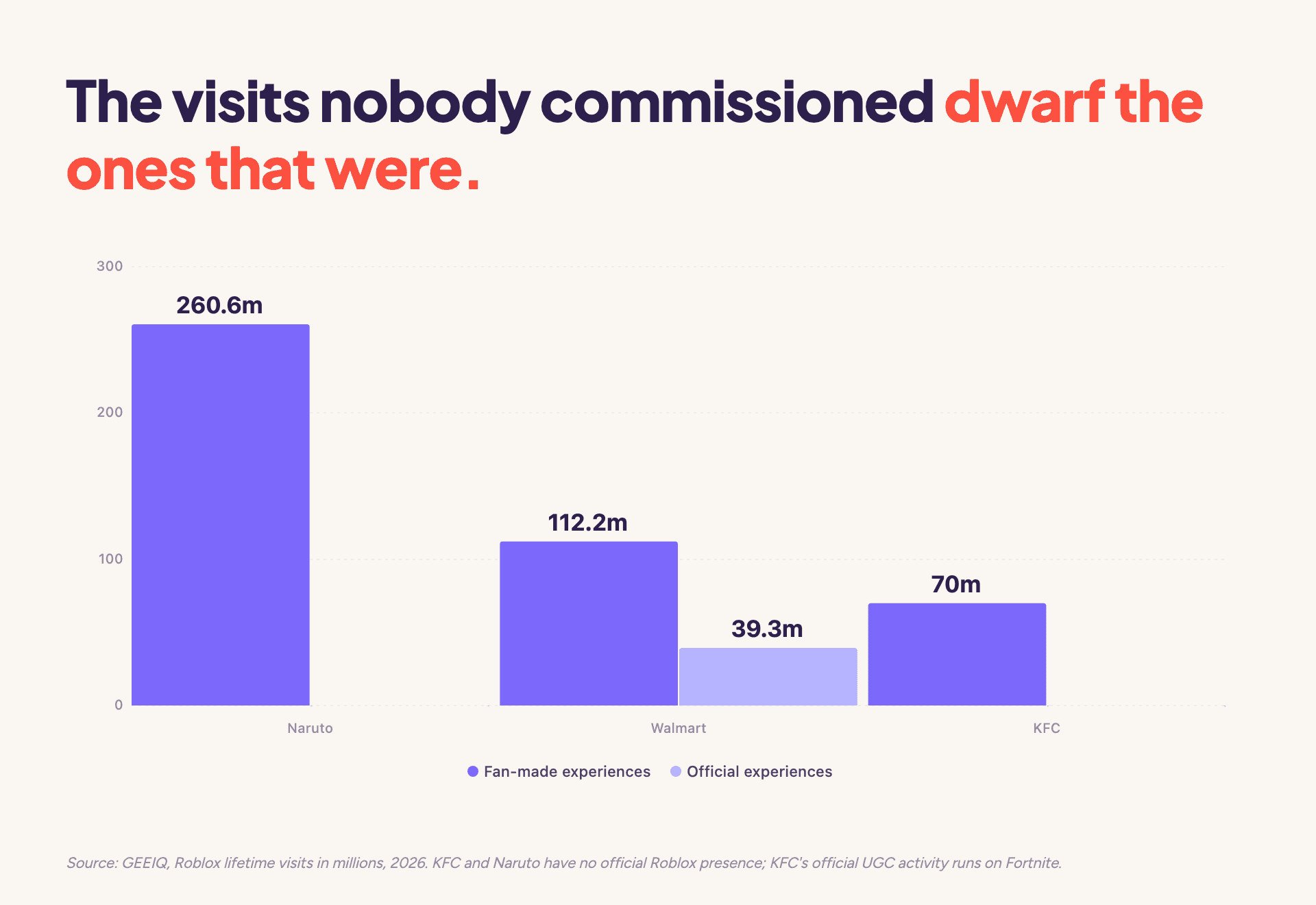
Lifetime Roblox visits, millions. Walmart is the only one of the three that answered the demand it found. Source: GEEIQ, Roblox lifetime visits in millions, 2026. KFC and Naruto have no official Roblox presence; KFC's official UGC activity runs on Fortnite.
You can't act on a footprint you can't see
The practical problem is visibility. Unofficial activity is scattered across thousands of experiences and marketplace listings, none of them tagged or reported to the brand. Official dashboards count what you launched, and nothing counts what the internet launched for you.
That's the gap our new Brand Check tool closes. It's free and it's simple: enter your brand at geeiq.com/brand-check, and a GEEIQ analyst sends you a snapshot of your brand's visibility across gaming, official and unofficial, within two working days. Where you're showing up, at what scale, and how that compares to your category.
For some brands the snapshot is confirmation. For others it's the first sight of an audience they never knew they had. Either way, it beats not looking, because the visits are happening whether you count them or not.
Check your brand's gaming footprint at geeiq.com/brand-check.
Check your brand’s gaming footprint
A GEEIQ analyst sends you a free snapshot of your official and unofficial presence across gaming