What is a virtual world?
A virtual world is a persistent, social 3D space that people enter as an avatar, move around in, and return to over time. Roblox, Fortnite and ZEPETO are the largest examples. It keeps running whether you are logged in or not, other real people are in it with you, and you have a presence there in the shape of your avatar. That is what separates a virtual world from a single video game with a start screen and an end credits roll.
For brands, this matters because a virtual world is a place, not a campaign slot. You can build something in it, put a product in it, and have people come back to it. And the audience is already there in numbers that are hard to reach anywhere else.
What makes something a virtual world?
Four things, really. A space has to be all four to count.
It is persistent
The world does not reset when you leave. It carries on, saves its state, and is there again when you come back tomorrow. This is why a brand can build a standalone destination inside a virtual world and treat it as real estate rather than a one-off event.
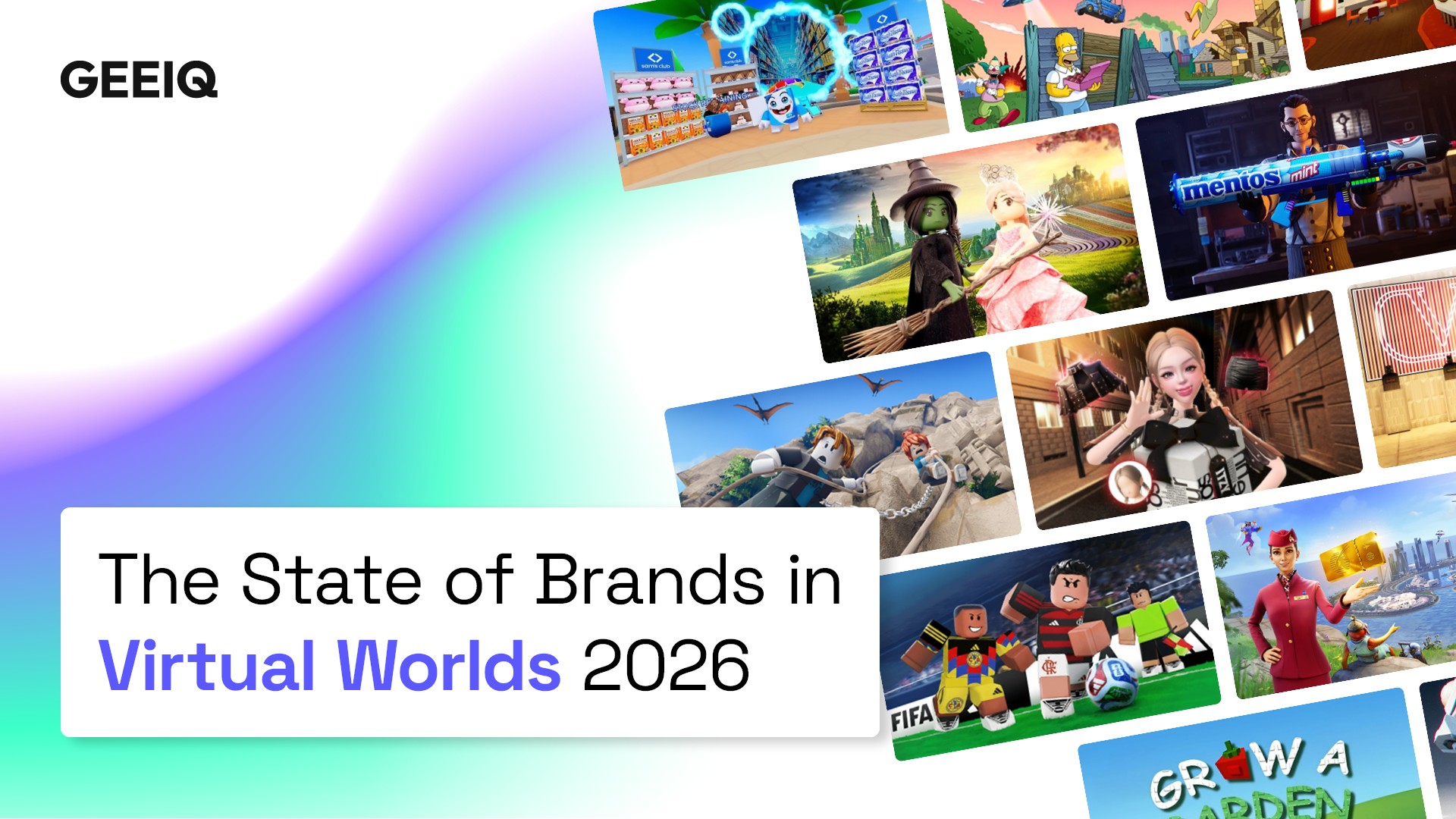
Walmart did exactly this with Walmart Discovered on Roblox, a branded space players can visit and return to. The build stays up. People find it, leave, and come back, the same way they would with a physical store.
It is social
You are never in there alone. A virtual world is a shared space where real people interact in real time, which means brands can meet players inside places they already spend time in, rather than asking them to go somewhere new.
Mentos did this with the Fizooka activation, dropped into an existing Fortnite experience that already had an audience. The brand went to where players were instead of building a venue and hoping they turned up.
It is embodied
You are present as an avatar. That avatar is how you move, how others see you, and how you express who you are. Fashion and self-expression are core behaviours in these spaces, in the same way they are in the physical world.
Gucci released a shoulder bag as a virtual item on ZEPETO. People bought it to carry on their avatar. When your avatar is your presence in a space, what it wears is a real signal, and brands that understand fashion understand that instantly.
It is open
Creators and brands can build inside these worlds, not just play within fixed rules. You can make your own experience, sell your own items, and shape your own corner of the platform. That openness is what turned virtual worlds from games into places brands can occupy on their own terms.
Virtual world vs video game: what is the difference?
A traditional video game is a closed, finite experience. You start it, play through it, and finish it. A virtual world is open and ongoing. There is no ending, the space persists, and the point is as much to hang out and socialise as it is to complete anything.
Put simply: a game is something you play, a virtual world is somewhere you go. Roblox is not one game, it is a platform holding millions of experiences that people move between while staying inside the same social space.
What are the biggest virtual worlds?
Three platforms come up most often for brands, and each rewards a different kind of presence.
Platform | What it is | Who is there | How brands usually show up | Example |
|---|---|---|---|---|
Roblox | The largest virtual world, a platform of millions of user-made experiences | Skews younger, strong with Gen Z and Gen Alpha | Brand-owned experiences and virtual items | |
Fortnite | A game and a creative platform, known for large live events | Broad and gaming-first | Integrations into existing experiences, or an own-built island | Mentos Fizooka |
ZEPETO | An avatar-led social platform built around fashion and self-expression | Skews younger, strong in Asia | Virtual items and avatar fashion | Gucci shoulder bag |
Roblox and Fortnite together account for 88% of all brand activations in virtual worlds, so for most brands starting out, the question is usually which of those two fits first. GEEIQ estimates Roblox alone has around 380 million monthly players, which would make it the largest single virtual world.
Why are brands investing in virtual worlds?
Because the audience moved, and the numbers are not small.
Young audiences treat gaming as their main way to spend time online. 92% of women and 93% of men aged 16 to 24 play video games, and 16 to 24s are the only age group to consistently rank gaming as their top reason to go online. That generation spends more than seven hours a day online in total, and 17.7% of them engaged with a branded game in the past month, a higher share than any older group.
It is also their social life. In 2024, US Gen Z averaged 2.6 hours a day on Roblox against 1.5 hours on TikTok. When a platform holds more daily attention than the biggest social app, it has stopped being a games venue and become a primary social space.
Brands have followed the audience in fast. Activations in virtual worlds grew from 58 in 2020 to 2,663 in 2025, a cumulative 2,810 brand experiences launched to date. Market spend rose 656% across the same period, from $30 million to a peak of $441 million in 2024.
And the brands that understand this are not treating it as a stunt. Netflix has run 42 activations across virtual worlds, more than any other brand GEEIQ tracks. That is the behaviour of a company using virtual worlds as a standing channel, coming back again and again rather than testing once and leaving.
The short version
A virtual world is persistent, social, embodied and open. It is somewhere people go, spend real time, and show up as themselves. For young audiences it is now a primary social space, and the brands that have worked that out are building in it on purpose. If you want the full picture of who is doing what and how it performs, the detail sits in the report below.