

Roblox is no longer a children's game. The platform hit 144 million daily active users in Q4 2025, a 69% increase year-on-year, and 44% of those users are now over 17 years old. For brands, that shift matters. The audience has spending power, and the platform has scale that rivals social media channels that have been part of the media mix for years.
Audience size alone doesn't explain why brands are doubling down on Roblox, though. It's the engagement. Users spent 124 billion hours on Roblox in 2025. To put that in context, monthly playtime on Roblox now surpasses Steam and PlayStation combined. Players inside an experience are active participants, not passive viewers, and that quality of attention is genuinely difficult to replicate through other channels.
That's the opportunity. The question is how to reach them.
Paid advertising on Roblox has its place, but the most effective brands aren't relying on it alone. They're working with creators who have already built trust with the exact audiences brands want to reach. This guide explains how that ecosystem works, what to look for in a Roblox influencer, and how to structure the partnership once you've found one.
The Roblox influencer ecosystem
The Roblox creator world doesn't sit neatly on one platform. Creators build audiences across YouTube, TikTok, Twitch, Discord, and Roblox itself, and the content they produce ranges from gameplay walkthroughs and speedruns to fashion and styling videos, item reviews, and first-look experiences.
Understanding where a creator operates and what kind of content they make is step one. There are three broad creator types worth knowing.
Casual and lifestyle gamers tend to focus on avatar aesthetics, fashion, styling, and trend-led content. They jump on new experiences early, value details and customisation, and often have highly engaged communities of like-minded followers. For brands with a fashion, beauty, or lifestyle angle, these creators offer a natural fit. Their content is already built around identity and self-expression, which is exactly what branded UGC items tap into.
Core gamers are the dedicated players: Let's Play creators, speedrunners, tutorial makers, and livestreamers who build audiences through skill and commentary. Their followers trust their opinions on game quality. A positive first-impression video from a core gamer can drive significant traffic to a new experience or activation, particularly at launch.
UGC creators specialise in Roblox's item economy, showcasing new drops, styling outfits, reviewing catalog items, and hunting down free UGC events. These creators have audiences actively looking for recommendations. If your activation involves virtual items, this is the creator type with the most direct purchase influence.
Most Roblox activations benefit from a mix of all three: launch visibility from core gamers, sustained engagement from lifestyle creators, and item-specific reach from UGC specialists.
How to evaluate a Roblox influencer
Finding the right creator involves both quantitative and qualitative assessment. Follower count is the least interesting metric. What actually matters:
Engagement rate tells you how connected a creator is to their audience. A creator with 50,000 highly engaged followers will typically deliver better results than one with 500,000 passive ones. Average engagement rates differ significantly by platform and follower tier, so benchmark appropriately rather than applying a single standard across the board.
Platform reach and distribution shapes what a partnership can realistically achieve. Some creators are predominantly YouTube-based; others drive most of their engagement through TikTok short-form or live on Twitch. Depending on your activation objectives, this will inform which platforms are worth prioritising and what deliverables make sense to brief.
Location, language, and brand affinity matter more in gaming than in many other channels, because Roblox communities are often culturally specific. A creator popular in the US may have limited pull in Southeast Asia, and vice versa. Genuine affinity between a creator's content style and your brand's world — not just their follower demographics — is what makes partnerships feel credible rather than transactional.
Vetting creators before you commit
High follower counts can be misleading, and the gaming creator space has its share of controversy. Before finalising any partnership, research the creator's history properly. Gen Z audiences, who make up a significant portion of Roblox's user base, actively hold brands accountable for the creators they associate with. A past controversy that seems minor can resurface at scale when brand money is attached to it.
Useful search patterns: creator name plus "controversy", "scandal", "backlash", "cancelled", or "offensive comments". Check Google, Reddit, and X. Look beyond surface-level results. A creator may be controversial within their niche even if they're unknown more broadly.
Briefing a Roblox influencer
A good brief sets expectations clearly and gives the creator enough direction to make content that works for both sides. The best briefs include:
Campaign goal and message: what the activation is, what you want players to do or feel, and any specific information the creator should communicate.
Key objectives: whether you're optimising for brand awareness, experience visits, UGC item purchases, or something else. This helps the creator understand which actions to encourage in their content.
Creative deliverables: number of posts, platforms, format (video, stream, short-form), links to include, and any specific in-game moments to showcase.
Timeline: when content should go live, particularly around launch dates and experience updates.
Content do's and don'ts: what the creator can and can't say, whether they should mention the brand directly, and any brand guidelines that apply.
The brief should be directive without being creatively restrictive. Creators know their audiences better than you do, and the brief should channel that knowledge, not suppress it.
Understanding influencer pricing
Roblox influencer pricing doesn't follow a fixed rate card. Several factors shape the cost.
Follower count is a starting point, but engagement rate often matters more. Niche audiences can command higher rates than large but passive ones. Platform affects pricing too. A Twitch livestream is priced differently from a single TikTok post. Usage rights, exclusivity clauses, and campaign timing all add to the base fee. Short lead times typically incur rush fees.
Beyond the numbers: if a creator genuinely likes your brand, they may offer added value or flexibility. Some prefer branded items, in-world perks, or event invites over a flat fee, particularly when the partnership feels authentic to their content.
Why this gets complicated at scale
A single creator partnership, with the right person and a solid brief, is manageable. Most brand activations on Roblox don't involve one creator, though. They involve shortlisting dozens, filtering by engagement, demographics, brand affinity and platform, vetting each one, and managing multiple briefs across overlapping timelines.
That process is time-consuming and, done manually, highly inconsistent. The data you need — performance metrics across YouTube, TikTok and Twitch, audience demographics, brand affinity signals, content history — lives across multiple platforms and doesn't aggregate cleanly.
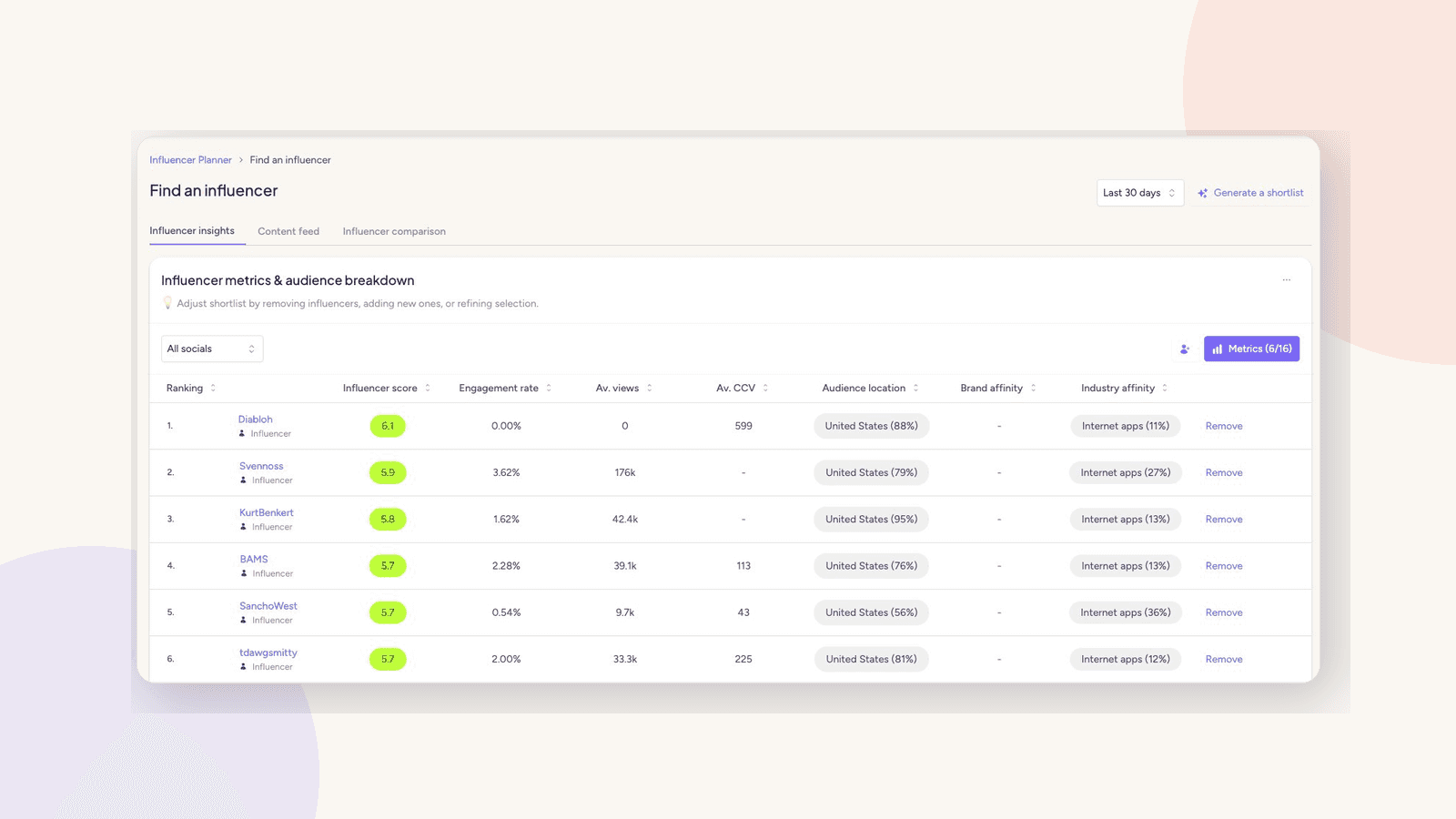
GEEIQ's Influencer Planner is built specifically for this. Set your campaign objectives, filter by demographics, engagement rates and brand fit, and generate a ranked shortlist in minutes rather than days. You can preview recent content directly in the tool, compare creators side-by-side on following and brand affinity, and filter sponsored posts specifically to see how creators have worked with brands before.
For brands taking Roblox seriously, it removes the guesswork from one of the most consequential decisions in the activation process.
This article is part of GEEIQ's guide to gaming influencer marketing. For a deeper dive into strategy, measurement and activation, see the full guide.
Book a demo with
one of our experts
See how GEEIQ helps brands measure and grow virtual world impact