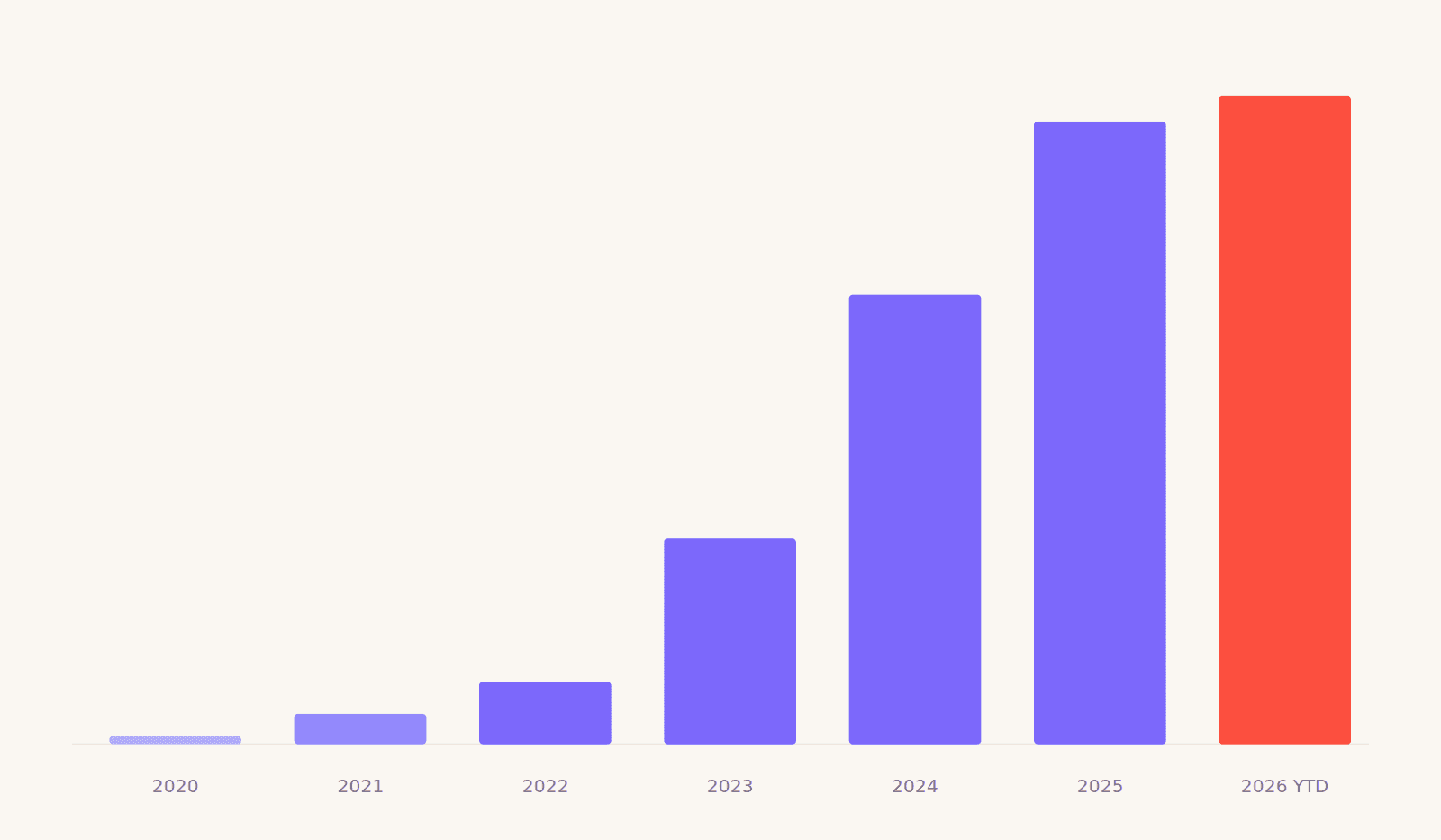


In 2020, GEEIQ had tracked 10 Media & Entertainment activations across virtual worlds. By Q2 2026, that cumulative figure is 788. A 79× increase in six years, and the steepest curve of any vertical we track.

Cumulative M&E activations: 10 in 2020, 36 in 2021, 76 in 2022, 250 in 2023, 546 in 2024, 757 in 2025 and 788 by Q2 2026. The curve steepens sharply from 2023. Source: GEEIQ platform data, 2020 to Q2 2026. Cumulative activations tracked.
This isn't a category catching up to gaming. It's a category that has decided gaming is where its audience now lives.
The wider context matters here. McKinsey's most recent attention economy work puts the global attention economy at $2.9 trillion, with gaming a $348 billion industry inside it. McKinsey's wider point is that attention quality, not just consumption hours, drives commercial value, and gaming earns the kind of focused, sustained attention most other media categories cannot. For Media & Entertainment brands whose business depends on attention, virtual worlds have stopped being an experiment. They are a permanent distribution channel.
The 79× isn't a single moment. It's six years of compounding momentum, and inside that curve are three structural shifts worth understanding.
The shape of the curve
The growth didn't arrive evenly. Here's what the cumulative six-year curve looks like:
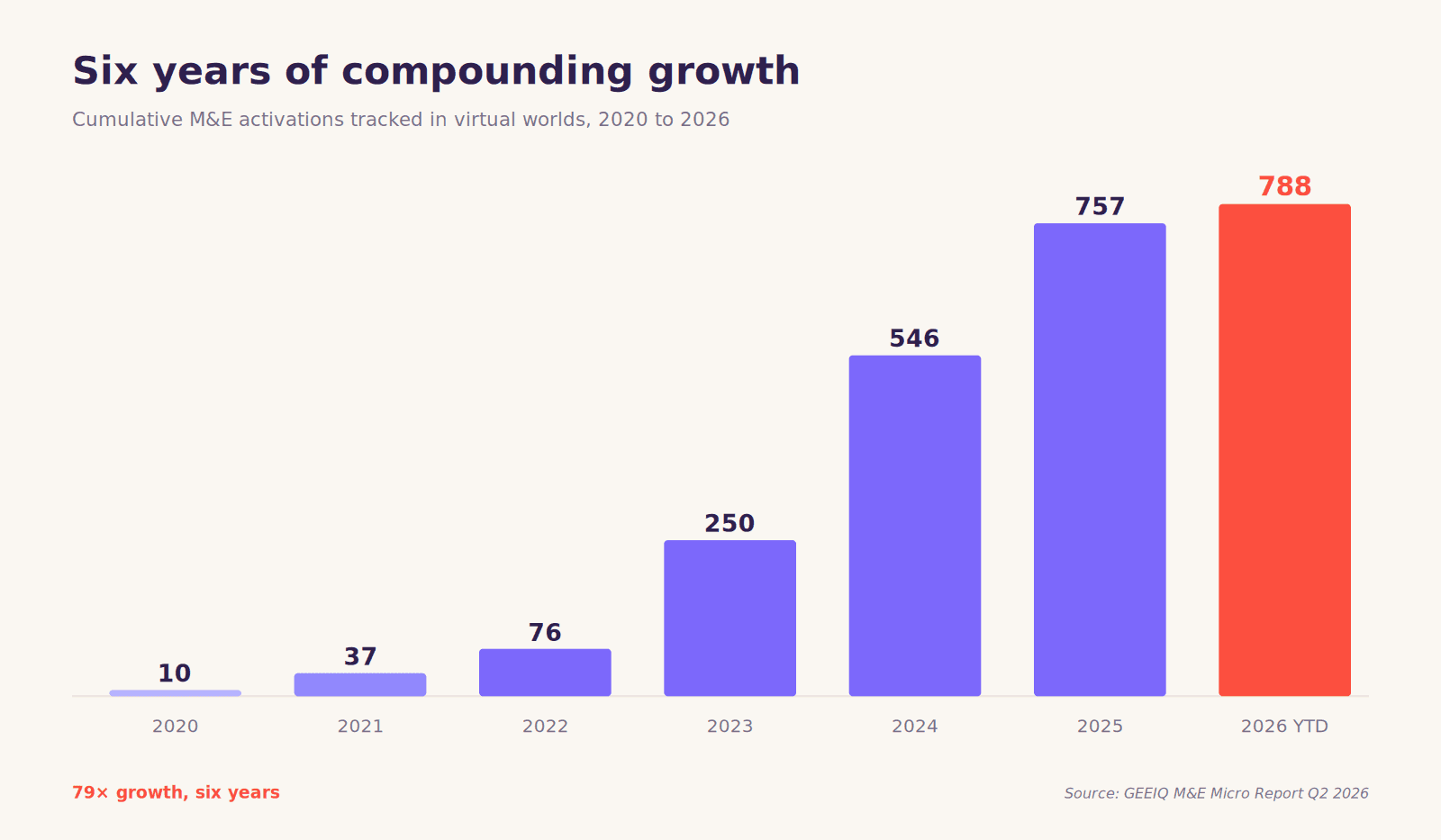
The first three years were a slow build. Brands were testing. Platforms were maturing. Media & Entertainment was treating virtual worlds as experimental real estate.
2023 was the inflection. The cumulative count jumped from 76 to 250 in a single year, with 174 new activations launched. 2024 added another 296. The category had moved from edge-case to core channel inside 24 months.
2025 added a further 211 activations, sustaining the pace. 2026 figures are early.
Who's driving it
The growth is not evenly distributed across Media & Entertainment. Film, TV and Streaming alone account for 65% of all M&E brands inside virtual worlds. Music & Audio sits at 15%. Creators, Sports and Live Entertainment at 9%. Publishing and Licensed IP at 8%. Gaming and digital-native brands at just 3%.
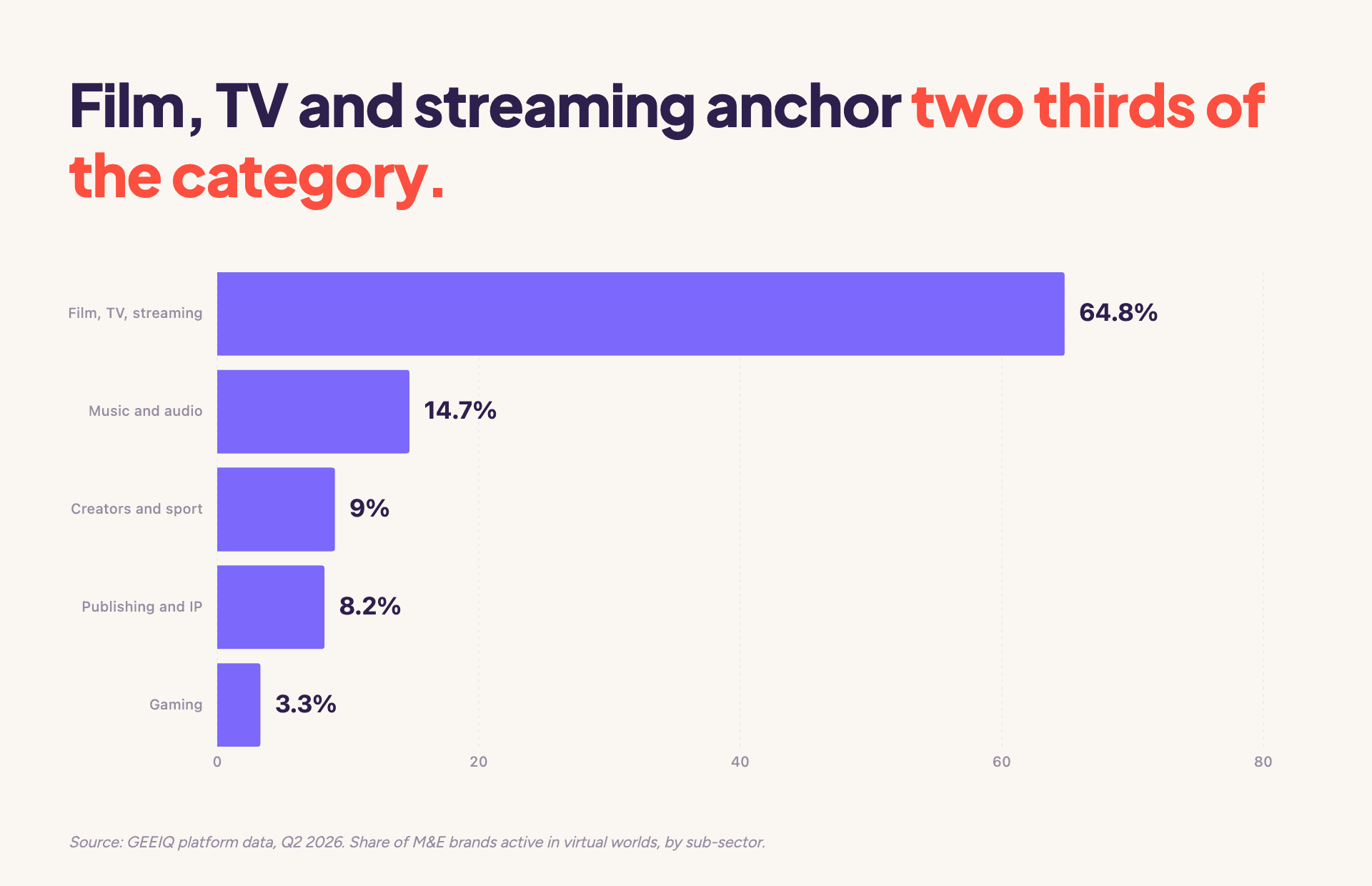
Share of M&E brands in virtual worlds by sub-sector. Source: GEEIQ platform data, Q2 2026. Share of M&E brands active in virtual worlds, by sub-sector.
The reason Film, TV and Streaming dominates is structural. Studios and streamers arrive with something other categories have to build: characters audiences already love, story worlds audiences already follow, and IP audiences already recognize. Translating that equity into a virtual world is faster, cheaper, and more reliably resonant than building a brand world from scratch.
The top of the M&E leaderboard reflects this. By activation count, the most active brands in virtual worlds are:
Netflix — 42 activations
Universal Pictures — 36
Nickelodeon — 34
DreamWorks Animation — 33
Disney — 27
Paramount Pictures — 26
BBC — 23
Cartoon Network — 21
Universal Music Group — 20
Lionsgate — 19
Streaming platforms, major studios, and kids' animation houses set the pace. Music labels including Universal Music Group, Warner Music and Sony Music Entertainment are all already inside the top 25.
The strategic shift inside the growth
Volume is the headline. The more interesting story is what happened to the type of activation those brands are running.
For the first five years of the curve, brand-owned worlds dominated. In 2020, 90% of M&E activations were owned. In 2021, that figure was 93%. Brands were building bespoke destinations, investing in custom worlds, and asking audiences to come to them.
Then 2025 happened. Brand-owned dropped to just 25% of M&E activations launched that year. Integrations into existing experiences climbed to 34%. And a third format, item drops, surged to 42%, the single largest category.
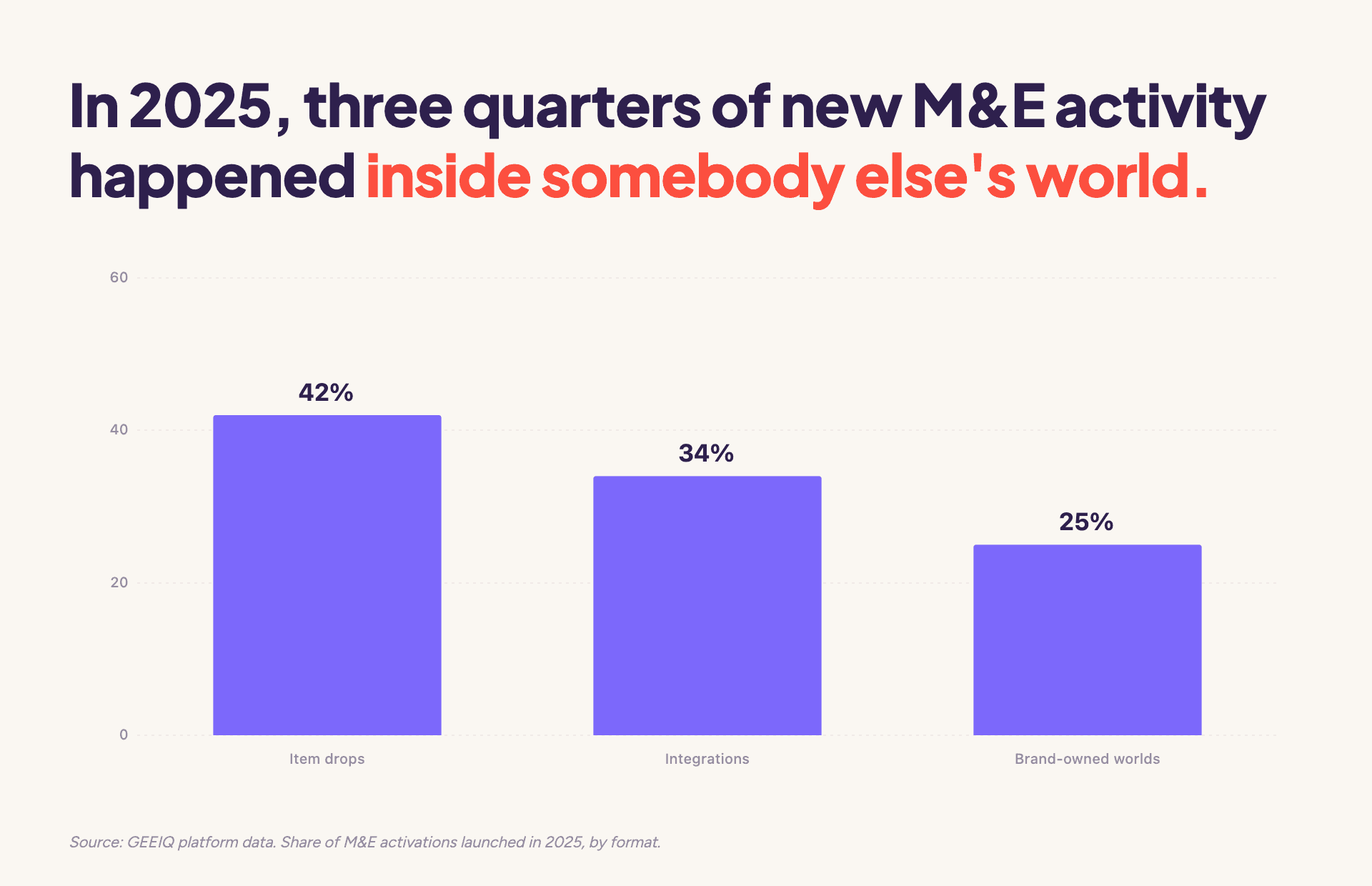
Format split of M&E activations launched in 2025. Brand-owned worlds fell to 25%, from 90% in 2020. Source: GEEIQ platform data. Share of M&E activations launched in 2025, by format.
Read that again. In 2025, three-quarters of new Media & Entertainment activity in virtual worlds was not a brand-built world. It was a brand showing up inside a world someone else had built.
The strategic logic is straightforward. Building a world from scratch takes time, money, and audience-acquisition spend. Integrations and item drops plug into existing audiences, with shorter launch timelines. For Media & Entertainment, where activations need to align with theatrical releases, season drops, and album launches, that speed matters.
The platforms reflect the same logic. 78% of all M&E activations in virtual worlds happen on just two platforms: Roblox (55%) and Fortnite (24%). The Sandbox (9%), Minecraft (6%) and ZEPETO together account for most of the remaining 22%. Where the audience already is, the activations follow.
What's working in practice
Some of the most active brands in virtual worlds demonstrate the era of integration in action. Netflix, Universal Pictures, Nickelodeon and DreamWorks Animation each run dozens of activations a year, using virtual worlds to extend reach around theatrical releases, season drops, and IP moments.
The pattern across the leaderboard is consistent. M&E brands are using virtual worlds to extend, amplify, and retain audiences around existing IP moments. The activation is no longer the destination. It's the connective tissue between content drops.
What comes next
A few implications worth watching.
Integrations and item drops look set to continue dominating new activations. The economics favour them, and the speed-to-market they offer aligns with how Media & Entertainment plans its release calendars.
Music is one to keep an eye on. All three major label groups (Universal Music Group, Warner Music, Sony Music Entertainment) are already inside the top 25 of M&E brands by activation count, and the sub-category is currently at 15% share.
And the brands that move first inside existing virtual worlds will be best placed to own the audience relationships as those worlds mature into the next generation of media platforms. The companies running multiple activations a year now are building a presence inside what is increasingly looking like a permanent channel.
Get the full report
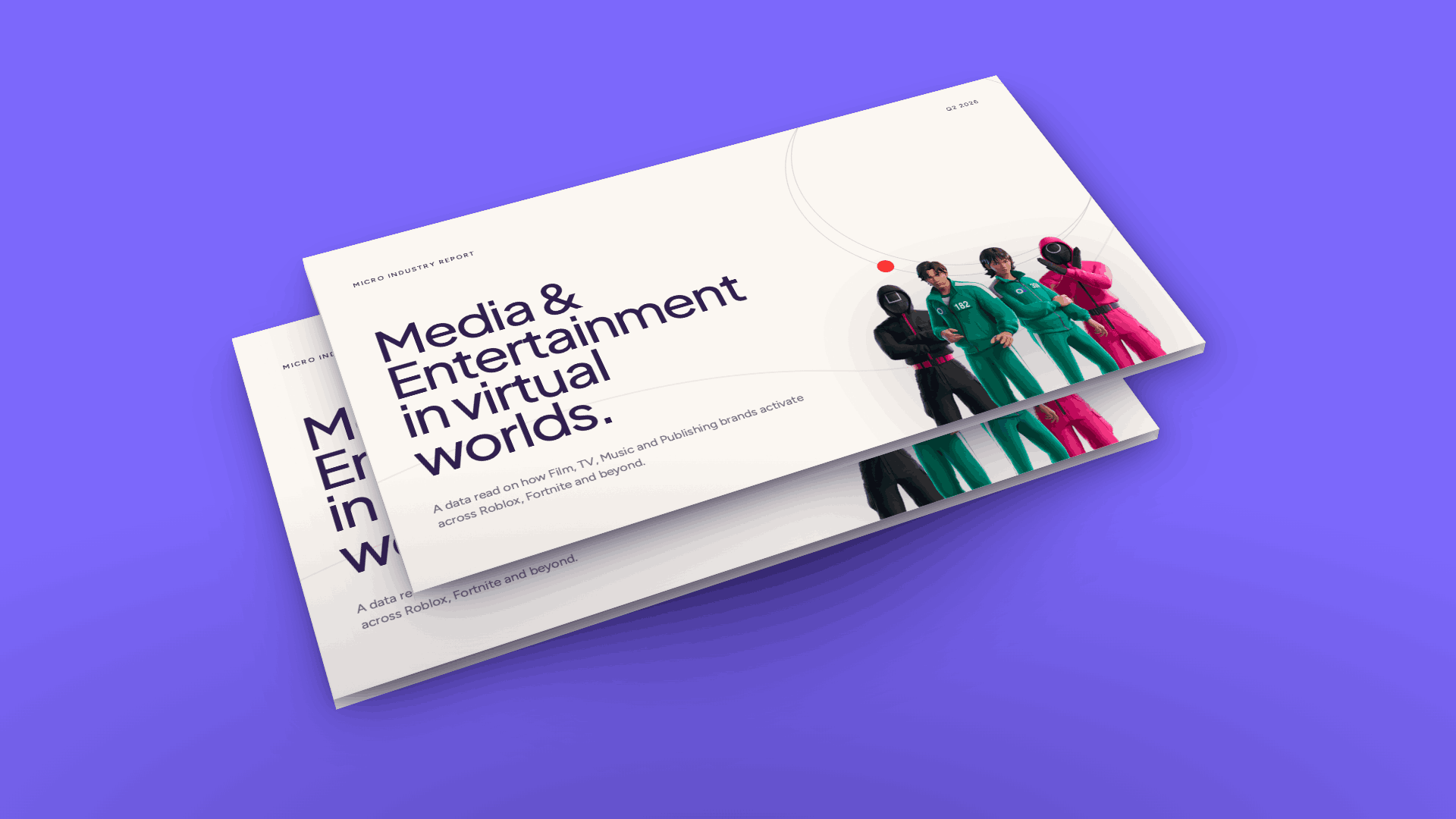
The Q2 2026 GEEIQ Media & Entertainment Micro Report covers the full data set: 213 unique brands, 788 cumulative activations tracked, every platform, every sub-category, and the strategic shifts shaping the category through the rest of the year.