

This article presents seven essential rules for brand success in gaming and virtual worlds. It focuses on boosting brand awareness, loyalty, and engagement.
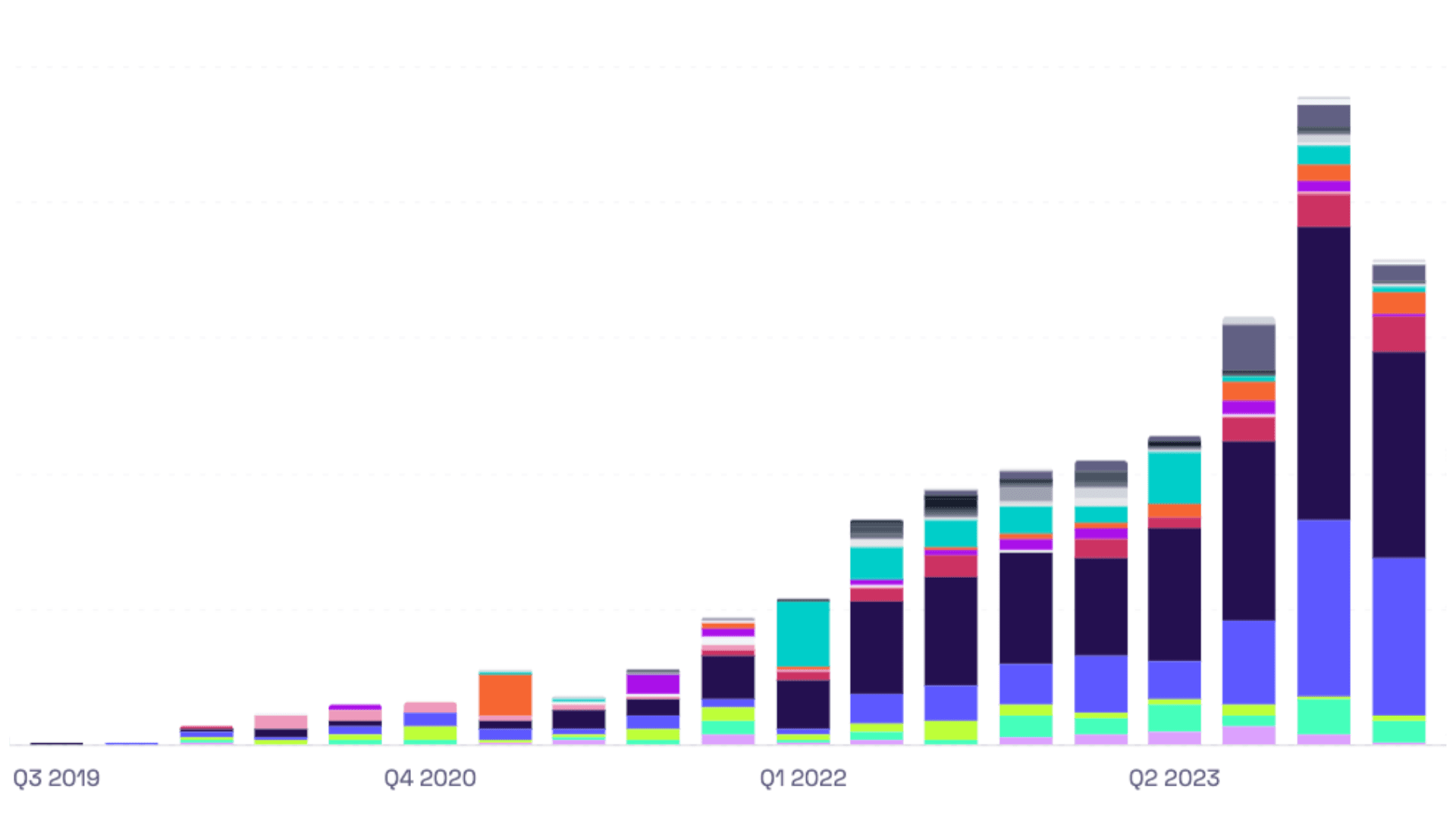
Despite multiple articles declaring the metaverse is dead, by GEEIQ's definition, that's not the case. More brands than ever are investing in gaming. In fact, in the first half of 2023, more than 350 brands activated in virtual worlds like Minecraft or Fortnite. By the end of the year, that number had more than doubled.
So, with the space becoming more saturated, how can brands cut through the noise and stand out in gaming?
This article outlines seven rules for success in gaming and virtual worlds. Of course, it is important to consider your brand’s specific goals when measuring success in gaming. However, these overarching tips will help you regardless of whether your brand aims to drive brand awareness, loyalty or engagement.
Ready to learn how to succeed in gaming? Read on 👇
Why are brands targeting Gen Z through gaming?
Gaming captures the attention of Gen Z more effectively than traditional social media. According to GEEIQ’s State of Virtual Brand Experiences in 2023, under 25s typically spend 180 minutes on Roblox, compared to 107 minutes on TikTok. Gaming content also dominates social media, with TikTok seeing 3 trillion views on gaming videos and YouTube gaming accruing over 100 billion hours of watch time in 2022.
It’s also not just the brands you’d traditionally think of as compatible with gaming who are investing in this space. The fastest-growing industries in gaming are Charities, Consumer Goods and Media & Entertainment. Recent activations include the American Heart Association on Roblox, Lionsgate on The Sandbox and Procter & Gamble on Fortnite.
These trends aren’t going to slow down any time soon. The average person already spends more time gaming than on social media. The average adult games for 1 hour and 51 minutes, versus 1 hour and 41 minutes on social media.
Major brands will continue to invest in gaming to attract elusive younger audiences and future-proof themselves.
1. Be authentic & fun
Authenticity is crucial when engaging Gen Z and Gen Alpha. It’s a delicate balance, but your brand's presence in gaming should respect the community's culture while remaining true to your brand identity.
A great example of this was GEEIQ partner Elton John’s experience on Roblox, ‘Beyond the Yellow Brick Road’. Elton John is known for his iconic and self-expressive outfits. This resonated with Roblox users as 84% of Gen Z say that digital fashion is somewhat important to them and 86% say that it is somewhat important their avatar expresses emotions in virtual worlds. So, to appear authentic and engage the Roblox community, Elton John’s virtual activation offered users the chance to try on his most iconic outfits and gain access to the ‘Heart Skip’ emote. The latter became the number one best-selling branded emote on the platform. Not to mention, Elton John’s overall experience became one of the most highly-rated concerts the platform had seen to date.
2. Listen to & work with online communities
Listening to a gaming platform’s community is crucial. By collaborating with creators and influencers who are native to gaming platforms, you can better understand what players want from your brand and how to appear authentic. This approach ensures that your brand's presence is not only accepted but embraced by the community.
For example, GEEIQ partner Walmart catalogued and showcased over 350+ creators for "Walmart Discovered". By empowering creators and integrating their contributions into the brand experience, Walmart fostered a sense of ownership and loyalty among the Roblox community. Their experience feels authentic as it serves a unique purpose: to help players find new UGC items. Now, Walmart has also become the first brand ever to offer real-world commerce on Roblox. At 96.34%, Walmart Discovered has one of the highest approval ratings of any brand on Roblox.
3. Deliver unique value and rewards
For brands venturing into virtual worlds, delivering unique value and rewards is key. Often this comes in the form of user-generated content (UGC) strategies that offer free or paid items avatars can wear. However, brands have also been increasingly innovative when delivering value with loyalty integrations.
Paris Hilton’s “Slivingland” experience on Roblox heavily leveraged UGC to drive engagement and reward players. Cynthia Miller, the Head of Innovation at Paris Hilton’s 11:11 Media, explained that “for the first eight weeks of launch we dropped new UGC items, Friday, 9pm every single week.”
However, their experience also went a step further. ‘Slivingland’ broke the mould by allowing 111 players to win Hilton Hotel Honors points for completing quests on Roblox. They translated in-game engagement into offline rewards.
Book a demo with
one of our experts
See how GEEIQ helps brands measure and grow virtual world impact