
Or did Bruno Mars just tap into where Roblox audiences already are?
Ahead of the 68th Grammy Awards on February 1st, something interesting happened on Roblox.
After years of virtual concerts being written off as a pandemic-era novelty, a short Bruno Mars performance drew 12.8 million concurrent players inside a creator-made Roblox experience. The numbers rival some of the biggest moments in virtual concert history, and raise a familiar question.
Are virtual concerts really back, or did this activation succeed for a different reason?
From novelty to fatigue, and back again
In 2020, virtual concerts on platforms like Fortnite and Roblox delivered unprecedented results. Travis Scott’s Fortnite concert alone attracted 12.3 million concurrent viewers, powered by novelty and a global appetite for shared live experiences.
As more artists followed, the impact began to fade. Concerts featuring Lizzo, Ariana Grande, David Guetta, and others struggled to pull players away from the experiences they were already spending time in. The format started to feel imported rather than integrated.
Then something shifted.
Events outperform content when the stakes are clear
Fortnite’s Remix Finale in November 2024 marked a turning point. With 14.3 million concurrent viewers, the event featured Snoop Dogg, Eminem, Ice Spice, and a Juice WRLD tribute, becoming the most watched virtual concert to date.
What mattered was not just the lineup. The concert was positioned as The Finale, the end of Chapter 5 ahead of Fortnite’s biggest transition in years. It wasn’t another show. It was an event with stakes.
Bruno Mars and the power of existing traffic
Fast forward to January 17, 2026. Bruno Mars appeared inside Steal a Brainrot, a creator-made Roblox experience launched only months earlier during peak Italian Brainrot culture.
The result was 12.8 million concurrent players.
This was not a quiet corner of the platform. Steal a Brainrot has consistently broken player count records on Roblox, hitting an all-time peak of 26 million concurrent users on October 11, 2025. Data from the GEEIQ platform shows massive spikes in traffic every Saturday, with the experience capturing a significant share of total platform activity.
In other words, the audience was already there.
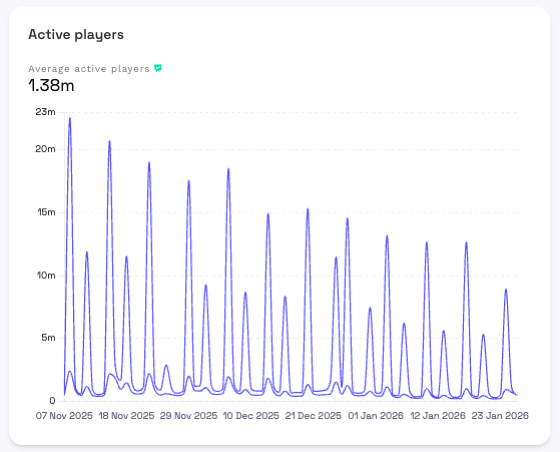
Were players there for Bruno Mars, or was Bruno Mars there for the players?
The concert itself featured Bruno Mars performing his new single “I Just Might” alongside “Locked Out of Heaven”. Attendees could collect custom in-game items, “Brunito Marsito” collectibles, with more than 5.4 million captured during the event.
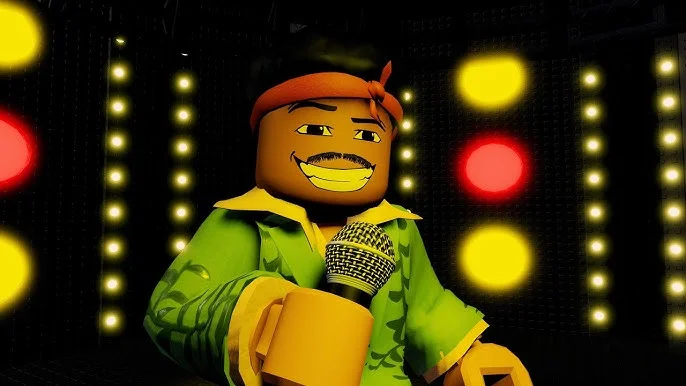
Interestingly, sentiment from players suggested many were less focused on the artist than the rarity of the collectible. For a younger Roblox audience, some were even asking, “Who is Bruno Mars?”
That does not mean the activation failed. Quite the opposite.
Roblox reported that the concert generated more than 53 million off-platform organic views across YouTube, TikTok, and other social channels. Shortly after, “Locked Out of Heaven” re-entered the global Spotify chart at number 14.
Bruno Mars absorbed attention that already existed, and amplified it far beyond the platform.
The bigger picture
Virtual concerts are not back because the technology improved. They are back because artists and platforms have relearned something important.
These moments work when they are treated as events, not content.
The emerging formula is clear:
- Go where audiences already are
- Create scarcity and timing that matter
- Integrate into game culture instead of importing external activations
For brands and artists alike, success is no longer about building something new and hoping players show up. It is about understanding where attention already concentrates, and earning the right to be part of it.